Latest

Norma K Hemming Award Shortlist

Cool news!

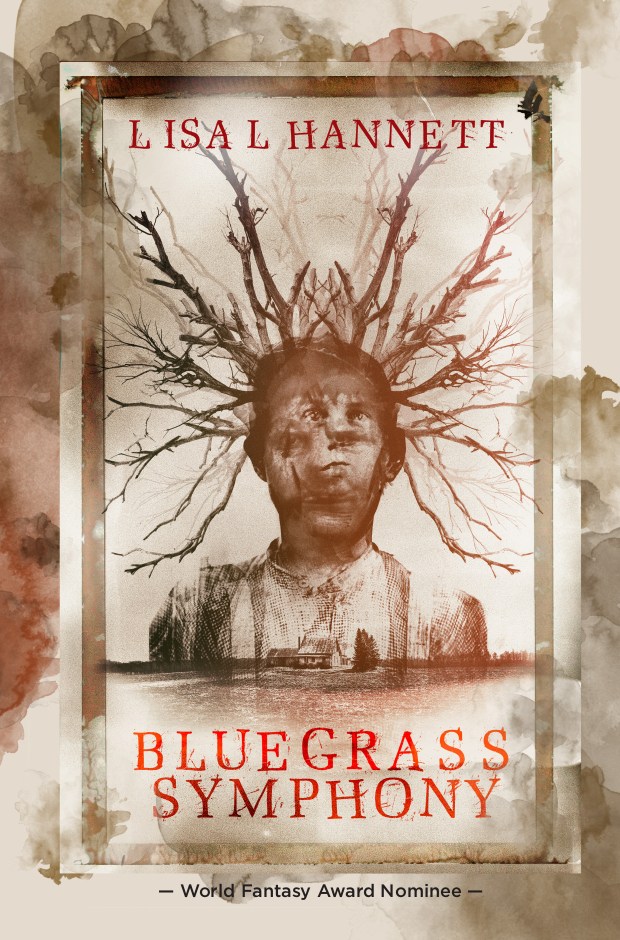
I just found out that Bluegrass Symphony has been shortlisted for the 2012 Norma K Hemming Award for race, gender, sexuality, class and disability in Australian speculative fiction. I’m gobsmacked! What an incredible honour to be included on this awesome shortlist:

Black Glass by Meg Mundell (Scribe)

Bluegrass Symphony by Lisa L Hannett (Ticonderoga Publications)

The Devil’s Diadem by Sara Douglass (HarperCollins)

Eona by Alison Goodman (HarperCollins)

Hindsight  by A A Bell (HarperCollins)

Nightsiders by Sue Isle (Twelfth Planet Press)

Road to the Soul by Kim Falconer (HarperCollins)

The Shattered City by Tansy Rayner Roberts (HarperCollins)

Yellowcake Springs by Guy Salvidge (Interactive Publications)

Winners and Honourable Mentions will be announced at the awards ceremony at Continuum 8 (51st Natcon on 8-11 June 2012). Congratulations, all!


Everyone Needs a Winter Writing Hat…

This is definitely the weirdest hat I own. I’ve got woolen hats with pom-poms, 1920s felt cloche hats, off-kilter fedoras, and handmade toques… but this is my first ever faux-fur, wannabe koala-head hat. It also has furry tassels, which you can’t see in the picture. How could I resist?

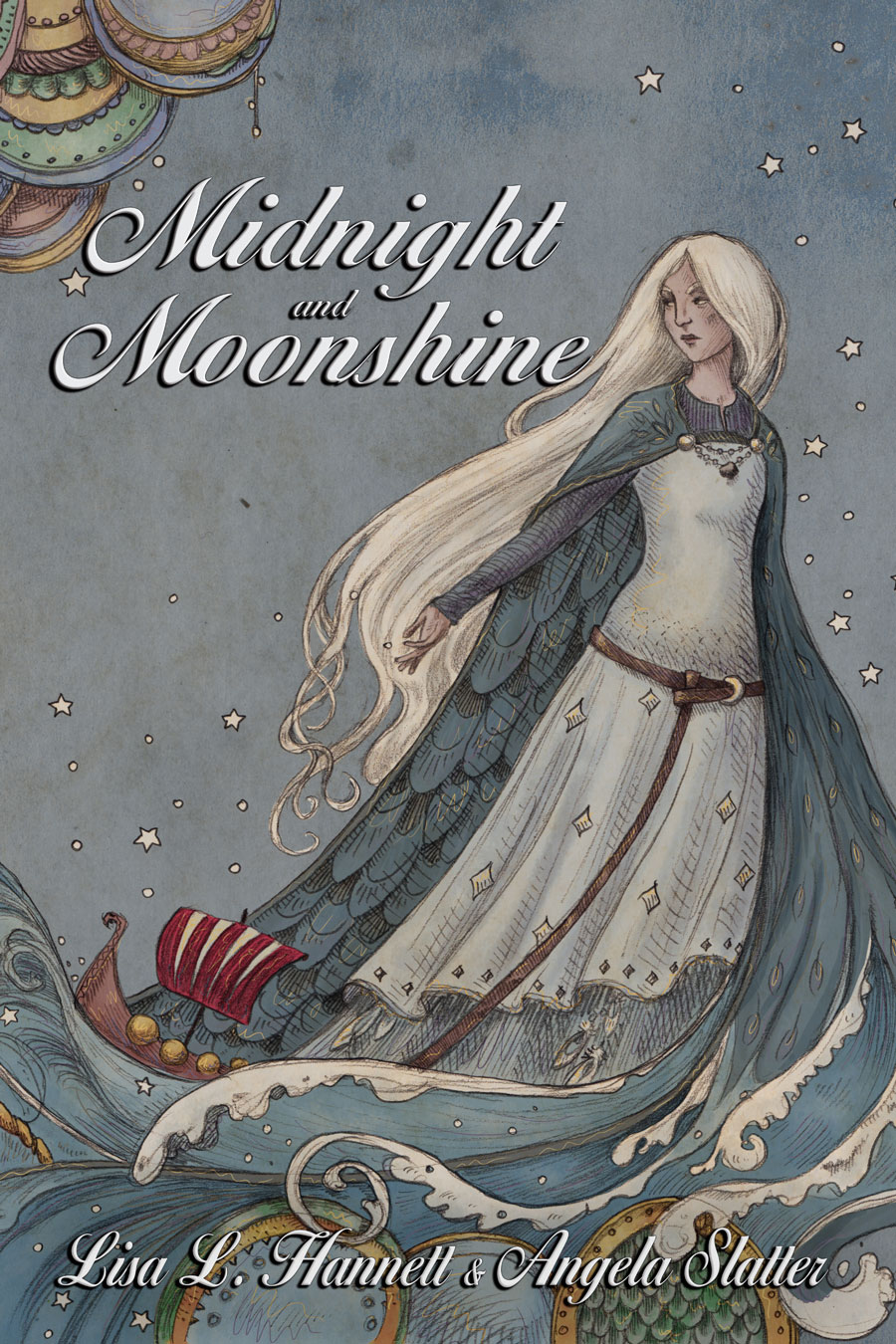
In all seriousness (though it’s hard to be serious with a fake koala on your head), autumn is swiftly giving way to winter here, and our house is COLD. In the summer, the cold rooms are my saving grace, but in winter the chill makes me feet freeze, and my hands, and my brain. I am often too busy thinking about when it was, exactly, I last felt my toes to be able to give my full attention to the plights of my characters… which is not particularly appealing at the moment, considering Angela and I are a whisker away from finishing Midnight and Moonshine, and I am still toiling away at The Familiar.

So this year, enter Koala Head and Tall Uggs: my Survive Winter Writing Gear.

Oh. So. Warm.

Tuesday Therapy: Finding Courage

Julie E. Czerneda is a best-selling, award-winning author of 14 novels and dozens of short stories — and, in her ‘spare’ time, she has edited over 15 anthologies (wow!) She is also one of the friendliest writers — and this is not an exaggeration — in the whole world. At Natcon in Adelaide a couple of years ago, I had the absolute pleasure of seeing Julie in conversation with Helen Merrick, and it was one of the most delightful convention sessions I’ve ever been to: the only drawback was, with such excellent questions from Helen and enthusiastic responses from Julie, the hour flew past far too quickly!

With her trademark ::lovemylife:: status updates on Facebook, Julie inspires people without even trying — and she joins us today with some advice that honestly gave me chills when I first read it.

Thanks, Julie!

For decades I’ve kept a faded post-it with a quote from J. Michael Straczynski where I’ll see it when I look up from my keyboard. “Courage is the writer’s main virtue.”

I believe that, utterly. How daring we are to lock our ideas and daydreams into words! How brave, to show the result to anyone else! To do our craft, our job, we pour out our innermost passions and convictions on a daily basis, edit them as cruelly as we can, then hand them to strangers.

If that doesn’t take courage, I don’t know what does.

So whenever I catch myself evading a difficult bit of writing (I’m a bit of a suck), or feeling overwhelmed by what’s ahead of me, or simply tired, I look at those words and give myself credit. It is hard. It has to be. I’ve found the courage before. I will again.

So will you.

Since 1997, Julie E. Czerneda has turned her love and knowledge of biology into science fiction novels and short stories that have received international acclaim, multiple awards, and best-selling status. A popular speaker on scientific literacy and SF, in 2009 Julie was Guest of Honour for the national conventions of New Zealand and Australia, as well as Master of Ceremonies for Anticipation, the Montreal Worldcon. She’s busy writing short stories as well as her next novel, having finished her first really big fantasy, A Turn of Light, to be published by DAW March 2013. Most recently, Julie was guest speaker at the U. of South Florida’s symposium on Women Writers of SF, and co-edited Tesseracts 15: A Case of Quite Curious Tales with Susan MacGregor. (No matter how busy, she’ll be out canoeing too.) For more about Julie’s work, visit www.czerneda.com or visit her on Facebook or Goodreads.

Guest Post at Booklife: Collaboration

On Friday, the first of two guests posts Angela and I wrote about our collaboration process went up over at Booklife. It was such fun writing these posts (the second one in particular, but you’ll have to wait until tomorrow to see it!) and great to get a chance to share a bit about how we work together.

For the most part, writing is a solitary activity. An idea strikes and you mull it over, jot notes, think about character and setting and plot. You may surround yourself with the company of other people, other writers — go to workshops and critique groups, to coffee shops with your laptop, or travel with notebook in hand — but when it comes to turning vague ideas into a story, when it comes to actually writing, it’s all about you and the blank page. No net.

Writers often prefer it this way. Some of us are natural introverts; we like solitude and the quiet processes of creating narratives, well-turned phrases, and engaging characters. Many of us squeeze writing in between jobs, family life, friends — so we steal a few moments out of our days to retreat into our imagined worlds. Others simply like to keep their work to themselves until it’s completely polished, until all the embarrassing plot-holes are filled and the clunky writing all tightened up. Also, the majority of writers are control freaks — we are gods in our own little cosmos.

Read the rest here.

Six stories on Ellen Datlow’s Year’s Best Honorable Mentions List!

So exciting! Ellen Datlow has just published the full list of Honorable Mentions for Best Horror of the Year, Vol 4 — and she gives the nod to SIX of my stories!

Hannett, L. L. “Gutted,” Shimmer 13.
Hannett, Lisa L. “Carousel,” Bluegrass Symphony.
Hannett, Lisa L. “From the Teeth of Strange Children,” Bluegrass Symphony.
Hannett, Lisa L. “Fur and Feathers,” Bluegrass Symphony.
Hannett, Lisa L. “Them Little Shinin’ Things,” Bluegrass Symphony.
Hannett, Lisa L. White and Red in the Black,” Dead Red Heart.

Wow! Lots of fantastic Australian writers also get mentions, including Angela Slatter, Cat Sparks, Kaaron Warren, Deb Biancotti, Margo Lanagan, Peter M Ball, Thoraiya Dyer, Alan Baxter, Kirstyn McDermott, Joanne Anderton… Hooray for everyone! And thanks to Charles Tan for passing on the link :-)

Tuesday Therapy: What Happens Next?

Foz Meadows is the author of Solace and Grief and The Key to Starveldt, YA urban fantasy novels that take readers into a version of Sydney filled with vampires, secret medieval dungeons and a swan-obsessed cat — among other marvellous things! The Sun Herald called Solace and Grief ‘an absolute ripper of a debut from a young Melbourne writer’ and Bookseller + Publisher describes her work as ‘a clever and funny supernatural romp, with a chilling underside to it…a smart and appealing read for the Vampire Academy crowd.’ Thanks to the wonders of technology (namely, Youtube) if you would like to hear the author herself read a snippet from The Key to Starveldt, click here.

This week, Foz shares a mantra that makes so much sense, I think we should all read this post at least twice.

According to my mother, my childhood reaction to stories was always the same: we’d get to the end, and I’d ask her, ‘What happens next?’

She only told me this recently – it was so long ago I’d forgotten ever doing it. But learning I had made me smile, because as an adult, asking myself ‘What happens next?’ is as close to a writing mantra as I come. Whenever I’m stuck, I sit and consider where the characters are. How do I move them on to the next location – what literally happens next? Do they need supplies? Do they have to rest, or finish a conversation, or check the lie of the land? Quite often, the simple act of focusing on what the character physically needs to do presents a solution. I’ll realise: Ah, Character A has to go to the stables now, which means he’ll run into Character B, and because it’s the first private moment they’ve had in days, they’ll end up having an emotionally fraught conversation about how they feel. Or else: There’s no reason to show Character C getting back to the house – instead, I should skip ahead to when she’s already home and Character D turns up.

It’s a question that helps with the big picture, too. What happens once they arrive at the palace? Will the courtiers welcome them, or will they be met with hostility? Will it be a short visit, or will they be there for longer than expected? By itself, asking ‘What happens next?’ might sound too vague and all-encompassing to be useful, but if you can apply it to specific aspects of your story – like a character’s immediate actions, or how a particular future event could play out – it becomes amazingly useful. Don’t be afraid to get things wrong, either – the beauty of free will is that both we and our characters can choose between many different courses of action, and sometimes, it’s the act of writing the wrong one that helps us pinpoint what actually needs to happen.

As a child, I think I asked ‘What happens next?’ because I’d figured out, however subconsciously, that stories don’t really end. Though fairy tales all finish with a happily ever after, we still understand that the heroes haven’t stopped existing – it’s just that we’re no longer watching them. The best characters are the ones we can imagine just getting on with their lives once the big adventure has finished – and maybe even embarking on a new one. So if you’re stuck, pick a particular part of the story and ask yourself: ‘What happens next?’  

Foz Meadows is a bipedal mammal with delusions of immortality. She likes cheese, geekery, writing, webcomics and general weirdness. Her novels, Solace and Grief and The Key to Starveldt, are now available from Ford Street Publishing. You can find her online here. Foz currently lives in St Andrews, Scotland, with not enough books and her very own philosopher. Surprisingly, this is a good thing.

Writing Process: Building Sandcastles

The second half of my ‘Writing Habits and Processes’ post for Nicole Murphy is now live. Such a great series — so glad I could be a part of it.

Do you have a different process for writing short stories versus novels?

The content is certainly different — the novel’s world is more detailed, descriptions are often lengthier and more specific, and there are more subplots and characters than there are in short stories — but the process of putting the narratives together is almost the same. The biggest difference in process is in revising and redrafting. Karen Miller once told me that writing the first draft of a novel is when you’re “telling yourself the story” and this is exactly what’s happening with The Familiar. I’m figuring things out as I go along, leaving some parts roughly sketched out, knowing that I’m going to have to go back to early chapters and rewrite large parts of them, add new characters, delete others, tighten up the plot, and so on. This is something that never happens when I work on short stories…

Read the rest here.

Tuesday Therapy: The Art and Obligations of the Favour

I’ve been running these Tuesday Therapy posts since November, when I was inspired by my dear friend Angela’s comment that “you can only eat an elephant one bite at a time.” Man, that is such a fantastic quote! So I blithely started this series, thoroughly enjoying all of the posts about writing we’ve had so far — and looking forward to all the great ones yet to come!

But I wanted to properly invite Angela to participate in the series — after all, the ‘elephant’ advice was completely spontaneous — so I’m delighted to share her Therapy session on The Art of the Favour with you today.

Angela Slatter is the author of so many incredible short stories it’s actually hard to keep track at this stage. In 2010, she had two collections published, Sourdough & Other Stories with Tartarus Press (UK) and The Girl with No Hands & Other Tales (Ticonderoga Publications). Two collections in one year! AND Sourdough was shortlisted for a World Fantasy Award, while The Girl With No Hands took home the Aurealis Award for Best Collection 2010. If you haven’t read these books yet, but love beautiful fairy tale retellings, dark fantasy, and strong female characters, then go track them down immediately. It’s okay — we’ll wait. You will adore them.

Favour [noun] = an act of kindness beyond what is due or usual.

An essential part of building a supportive community – indeed part of getting anything done – is the favour. I don’t mean cash in brown paper bags or Strangers on a Train kinds of favours … no, I mean the favours that help people along in their writing career.

Things like professional advice and critiquing, or letting someone know there’s an anthology their work might fit or if a publishing house has an open reading period. Pass on opportunities because one day someone might do the same thing for you. Higher level favours may take the form of introductions to editors, publishers, agents and other authors. It might be judiciously extending invitations to writerly functions to help people make connections and create networks – the caveat is, of course, don’t drag along an entourage of forty-two wide-eyed newbies, manuscripts clutched in their sweaty hands, who devour the cheap wine and the dollhouse canapés like a plague of locusts (people will remember you brought them).

As the definition says, a favour is an act of kindness. If someone has extended a favour specifically to you (the favouree), it’s really bad form to then pass it on to someone else – someone the original favourer does not know. At least ask permission. Favours are extended because someone met you, liked you, thought you have the potential to go further if only you get a helping hand – favours are personal. Do not re-gift favours.

Read the rest of this page »

Writing Habits, Or How Lisa is Addicted to Her Diary

Design by fotografik

In other news, Nicole Murphy is running a fantastic series of interviews on her website, in which she has asked a slew of authors about their writing habits and processes. There have already been such a wonderful responses, from the likes of Sean Williams, Angela Slatter, Joanne Anderton, Kate Forsyth, Justina Robson — and so many more! You can find the complete list to-date here.

There are two posts per writer: one focusing on habits, the other on processes. This week, it’s my turn to give my two cents — and my first post, in which I reveal what an anal-retent I am, is now live. Thanks, Nicole!

Chilling Tales 2

It’s not coming out for a while yet (2013), but Michael Kelly has posted the awesome ToC for Chilling Tales 2: In Words, Alas, Drown I, the all-Canadian horror anthology being published by EDGE. Gemma Files, Claude Lalumière, Simon Strantzas — and so many more amazing authors! I’m so delighted to have a story in this book!

‘In Libitina’s House’ by Camille Alexa

‘Gingerbread People’ by Colleen Anderson

‘Meteor Lake’ by Kevin Cockle

‘Homebody’ by Gemma Files

‘Snowglobes’ by Lisa L Hannett

‘The Dog’s Paw’ by Derek Künsken

‘The Flowers of Katrina’ by Claude Lalumière

‘Goldmine’ by Daniel LeMoal

‘The Salamander’s Waltz’ by Catherine MacLeod

‘Weary, Bone Deep’ by Michael Matheson

‘The Windemere’ by Susie Moloney

‘Black Hen A La Ford’ by David Nickle

‘Day Pass’ by Ian Rogers

‘Fiddleheads’ by Douglas Smith

‘Dwelling on the Past’ by Simon Strantzas

‘Heart of Darkness’ by Edo van Belkom

‘Fishfly Season’ by Halli Villegas

‘Road Rage’ by Bev Vincent

‘Crossroads Blues’ by Robert J. Wiersema

‘Honesty’ by Rio Youers

Follow

Get every new post delivered to your Inbox.